
 ES
ES
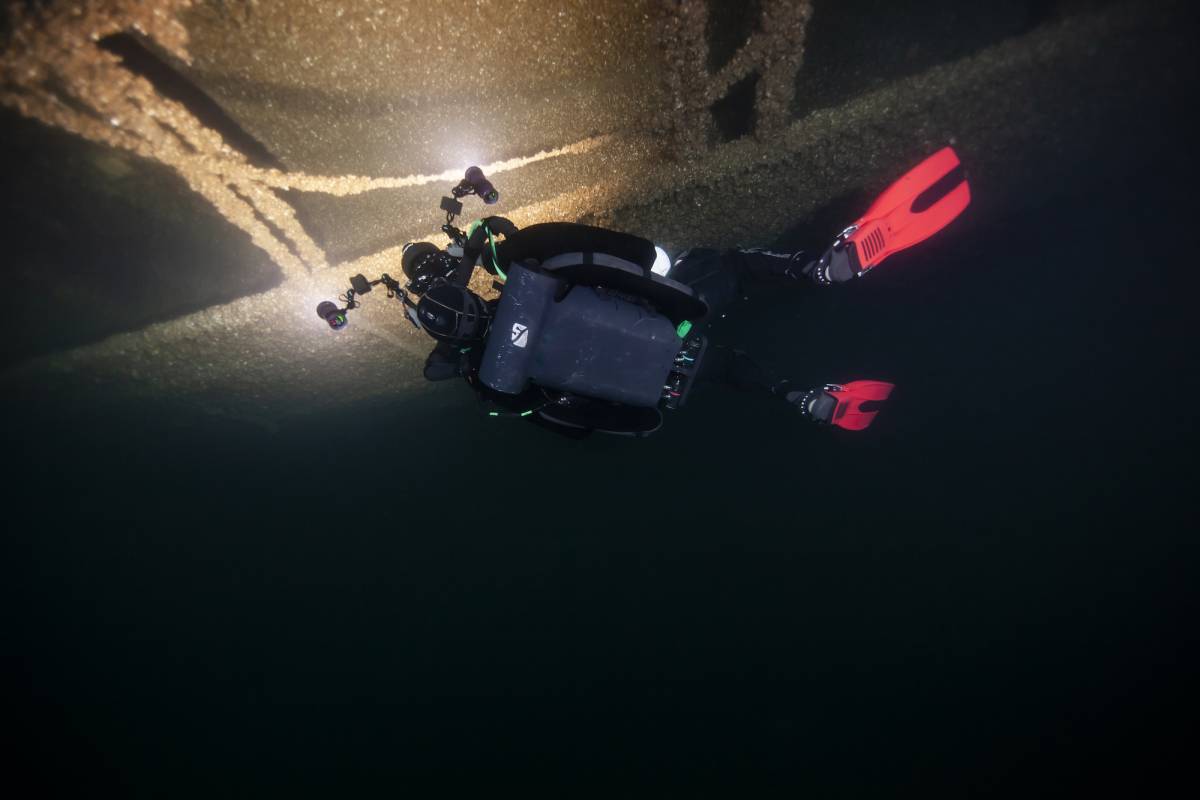
Mixed Gas CCR Diver
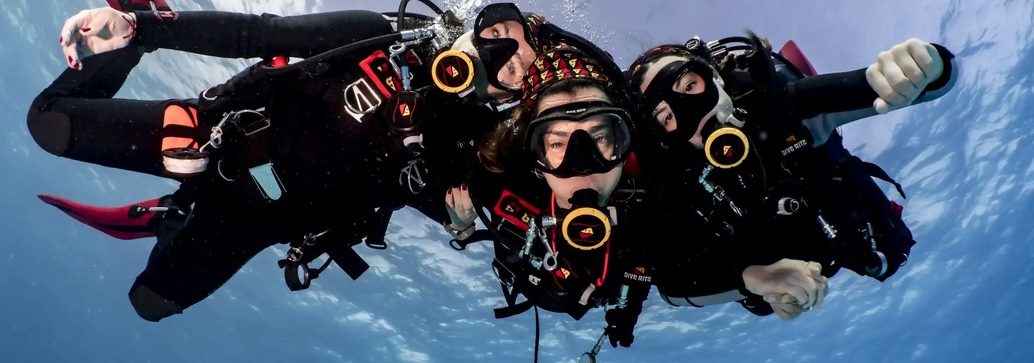
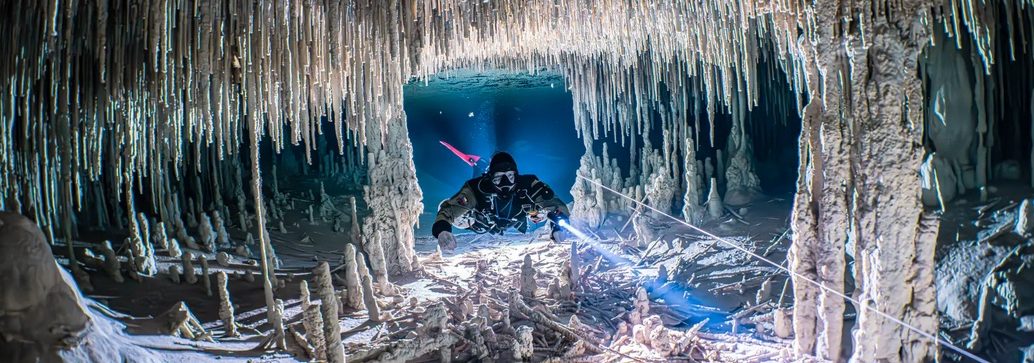
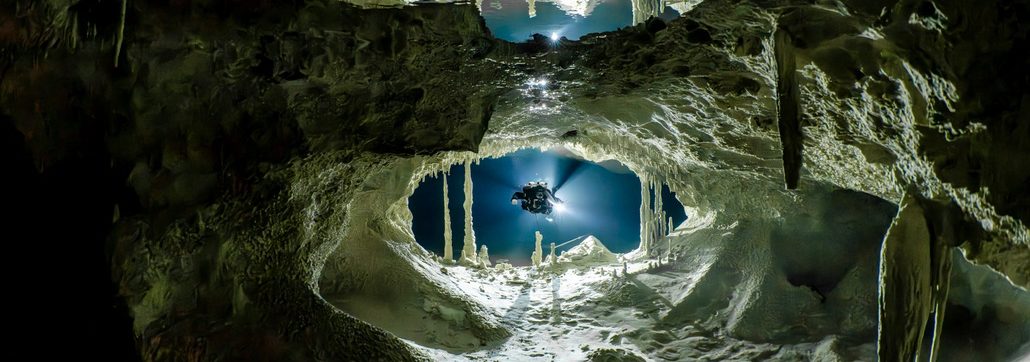
This is the intermediate-level certification course for divers who wish to use a closed-circuit rebreather (CCR) for mixed-gas diving. The objective of the course is to introduce divers to the benefits, hazards, and proper procedures for mixed-gas diving specifically with a CCR, using a mixed-gas diluent containing 16% or more oxygen, and to develop intermediate CCR diving skills appropriate for technical diving to a maximum depth of 60 meters / 200 feet.
- Duration: 7 days
- Depth: 60 m
- Price per day per person
Price per person
BOOKING
Reservation confirmations require a 50% deposit. We accept bank transfer, credit card or PayPal. Full payment must be settled in Mexican pesos at the daily USD exchange rate or in cash prior to the start of your dive activity. Deposits for reservations are non-refundable, in certain circumstances, such as unforeseen medical issues or emergencies, the course or dive activities may be rescheduled. Any cancellation less than 24 hours prior to your first day of diving will be charged in full.
SCHEDULE
You can customize your course or dive trip according to your preferences and schedule throughout the year, we are open for training and diving seven days a week. The schedule can be adapted and subject to change due to weather conditions.
Requirements
Minimum age: 18 years.
Provide a verified log of at least 50 hours of rebreather diving spread over at least 50 dives with the specific rebreather. Valid logged dives must be deeper than 9 meters / 20 feet; at least 20 must be deeper than 30 meters / 100 feet; and at least 10 dives must require staged decompression. If the diver has 50 hours in another CCR unit recognized by TDI, only 25 hours/25 dives in the specific unit are required. If you are completing a unit crossover, provide proof of at least 10 logged CCR dives within the last 12 months.
Hold the TDI Air Diluent Decompression Procedures Rebreather / TDI CCR Helitrox Diluent Decompression Procedures Diver certification or equivalent from agencies recognized by TDI.
What will you learn?
Theory
- History and evolution of rebreathers.
- Comparison of open-circuit, closed-circuit, and semi-closed-circuit rebreather systems.
- Practical mechanics of the system.
- Gas physiology.
- Proper packing of the scrubber, according to the manufacturer’s recommendations.
- Design and maintenance of electronic or manual systems.
- Dive tables.
- Dive computers.
- Dive planning.
- Emergency procedures.
- Considerations regarding helium.
Skills
- Assemble the unit according to the manufacturer’s specifications using the manufacturer’s manual/checklist.
- Demonstrate familiarity with basic and intermediate hand signals.
- Select and prepare the appropriate equipment for a mild environment with long decompression stops.
- Conduct team drills for the deployment of lift bags and rescue procedures.
- Conduct buddy rescue drills.
- Properly analyze all gas mixtures to be used.
- Demonstrate adequate pre-dive planning.
- Perform pre-dive checks using the TDI pre-dive checklist.
- Use START* before each dive.
- Stress analysis and mitigation.
- Demonstrate a good understanding of team members through communication, proximity, and team-oriented diving practices.
- Demonstrate buoyancy control; the ability to float in a fixed position in the water column without moving the hands or feet.
- Removal and replacement of the mask; deployment of the backup mask.
- Correctly execute a recovery following a system failure and complete the dive and decompression using open-circuit gases transported from a depth greater than 30 meters/100 feet.
- Demonstrate the ability to connect to and share outboard gas, including the exchange of outboard rescue cylinders.
- Correctly execute a recovery following a system failure and complete the dive and decompression with the unit in manual mode.
- Blackouts and gas loss, correct selection and switch to outboard gases.
- Broken hoses, catastrophic failure scenarios.
- Flooded absorbent container.
- Cell malfunctions.
- SCR drill (minimum 10 minutes).
- Oxygen rebreather mode at depths less than 6 meters / 20 feet
- Stop at 3 to 6 meters / 10 to 20 feet during descent to check for a leak bubble.
- Demonstrate proficiency in handling 2 rescue cylinders, including dropping and retrieving them while maintaining position in the water column.
- Deployment of a lift bag / delayed surface marker buoy (DSMB) at depth and mid-water
- Simulation of lift bag / DSMB deployment failure.
- On 2 of the dives, demonstrate an ascent using an ascent reel and lift bag and perform a staged decompression.
- Monitoring of electronic systems for PPO₂ levels.
- Validation checks of the tanks to ensure proper use of diluent and oxygen.
- Correct execution of the dive within all predetermined dive limits.
- Demonstration of decompression stops at predetermined depths.
- Demonstrate a controlled ascent with a simulated toxic diver, including a tow to the surface of at least 50 meters / 165 feet with removal of equipment at the surface, in water too deep to stand.
Included in the course:
- Private instructor.
- In-person sessions.
- Transportation to the cenotes or boat ride from the shop.
- Single, CCR, side-mount, and double tanks.
- Weight.
- EAN 32 fills.
- Certification card.
- Water and snacks.
Not included:
- Entrance fees to cenotes (between US$10 and US$15 per day).
- Diving equipment
- Manual or e-learning
- O2, decompression gases, and trimix (when applicable).
- Lunch.
- Diving insurance.
Servicios Adicionales
- Equipment Rental and/or Sale
- Basic Diving Equipment
- Rental: $5 per item per day (Wetsuit, Mask, Boots, Fins).
- Sample Gas Rates
- EAN 50, 80 CUF. $21 per tank
- O2 100% 13 CUF. US$ 25 per tank
- Trimix 21/35 80 CUF. US$ 85 per tank
- Cave diving equipment:
- Sidemount harness (Rental US$ 20 per day).
- Sidemount Regulator Set (Rental US$ 25 per day).
- Twinset Wing / Backplate (Rental US$ 20 per day).
- Twinset Regulator Set (Rental US$ 25 per day).
- Stage Regulator and Rig (US$ 15 per day).
- Primary Cave Light (US$ 20 per day).
- Backup Light (US$ 5 per day).
- Filter
- EAC Cartridge US$ 85 (approx. 4–5 hours of scrubbing)
- Sofnolime 8–12 US$ 12 per lb.
-

Adult and Emergency Care
This course prepares you to be able to respond to emergencies or injuries until they…
$180 -
Advanced Cave Diver
Este curso proporciona una alternativa al curso NSS-CDS Cave Diver. Incluye todo el desarrollo académico…
$350 -
Advanced Mixed Gas CCR Diver
Este es el curso de certificación de más alto nivel para buceadores que deseen utilizar…
$380