
 EN
EN
Antartica
An epic expedition to the wild white continent, the Antarctic Peninsula is part of the largest peninsula in West Antarctica, protruding 1300 km (810 miles) from a line between Cape Adams (Weddell Sea) and a point on the continent south of the Eklund Islands. Beneath the overlying ice sheet, the Antarctic Peninsula consists of a chain of bedrock islands; these are separated by deep channels whose bottoms lie at depths considerably below present sea level. They are linked by a layer of ice put ashore. Tierra del Fuego, the southernmost tip of South America, is about 1000 km (620 miles) away across the Drake Passage.
- Divers and non-divers are welcome
- Limited space: 11 people.
BOOKING
Reservation confirmations require a 50% deposit. We accept bank transfer, credit card or PayPal. Full payment must be settled in Mexican pesos at the daily USD exchange rate or in cash prior to the start of your dive activity. Deposits for reservations are non-refundable, in certain circumstances, such as unforeseen medical issues or emergencies, the course or dive activities may be rescheduled. Any cancellation less than 24 hours prior to your first day of diving will be charged in full.
SCHEDULE
You can customize your course or dive trip according to your preferences and schedule throughout the year, we are open for training and diving seven days a week. The schedule can be adapted and subject to change due to weather conditions.
Polar Diving
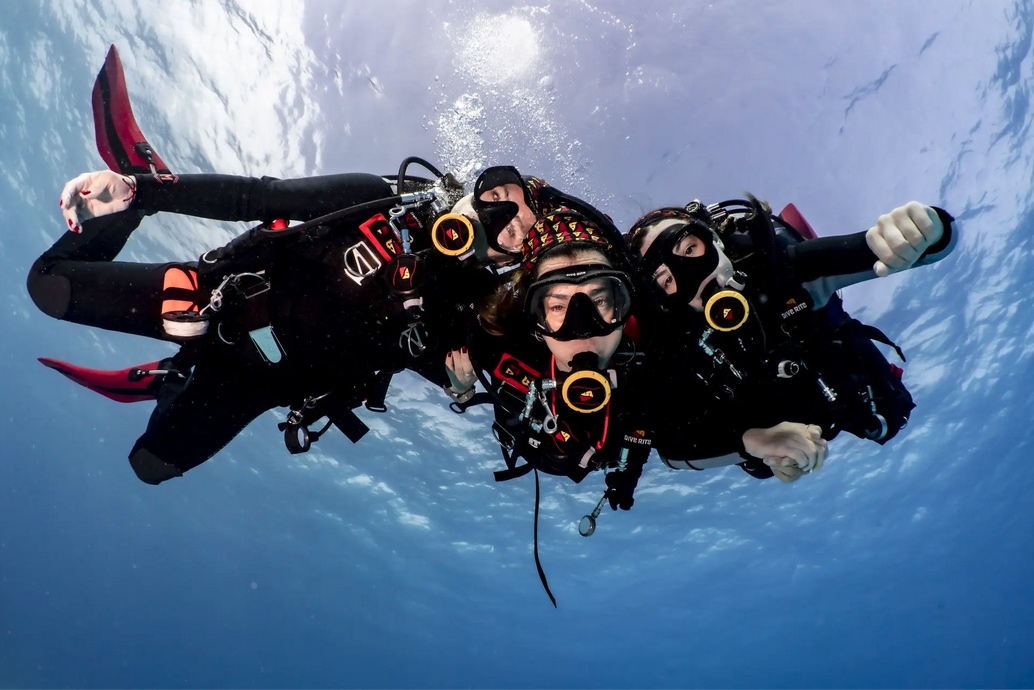
Visiting the polar regions is a fantastic adventure, but just beneath the waves, another extraordinary world awaits for you to experience and explore. Our polar expedition offers you the ultimate firsthand experience of the local wildlife and terrain, but it is our intimate knowledge of the seas that allows us to also provide you with an unparalleled adventure beneath the waves. True expeditions in every sense of the word, during which you’ll have access to some of the most picturesque dive sites in the polar regions.
You can explore the depths of icebergs, encounter exotic marine life, and enjoy the beautiful interplay of ice, light, and water in a world rarely seen. Penguins, leopard seals, humpback whales, and sea lions are the highlights of our amazing marine life encounters, but also sea squirts, plump lobsters, spider crabs, soft corals, anemones, peacock worms, dogfish, sea snails, crabs, sea butterflies, bushy sea horses, jellyfish, sea urchins, walls of seaweed, and various species of starfish and exotic polar marine life. The Antarctic islands are also rich in krill, one of the primary food sources for any marine species and, therefore, very useful for locating wildlife.
Antarctica’s dazzling ice caps, colossal glaciers, and towering mountains are rivaled only by the white-sand beaches and lush vegetation of the sub-Antarctic islands. Both regions are home to a wide variety of penguins, whales, seals, and seabirds. This expedition to the Antarctic Circle and the Antarctic Peninsula travels through waters frequented by humpback, minke, and fin whales. Anchoring at various locations throughout the region, the expedition offers opportunities for walking, kayaking, and snorkeling in waters teeming with icebergs.
The details of our dives and itineraries are based on the extensive experience of our guides, all of whom have worked in the polar regions. When you dive with us, you get the best polar adventure in the most capable hands.
General Diving Information
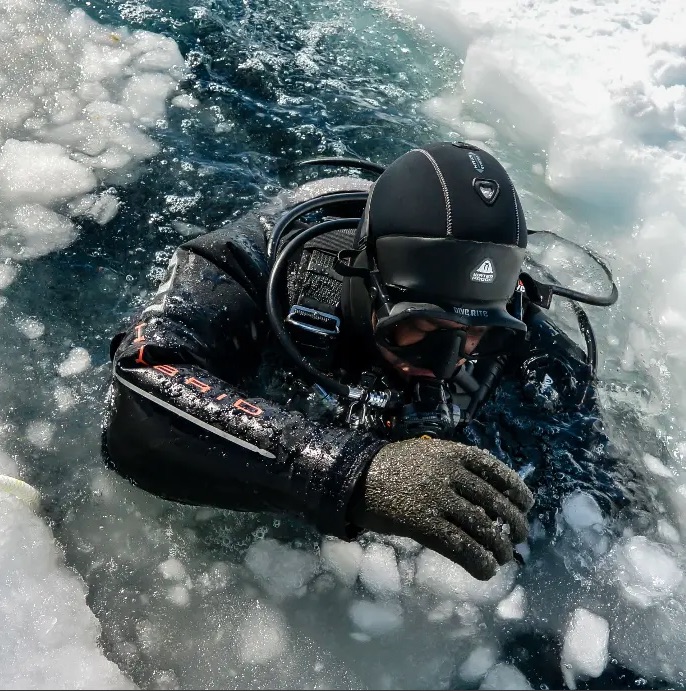
Divers must have experience diving in cold water using a drysuit. Our goal is to conduct one or two dives per day (one in the morning and one in the afternoon). Our ability to dive depends on local ice and weather conditions. All dive guides are certified and experts in their field. Divers must bring their own personal equipment. On board: tanks, compressors, and weights. We conduct dives from Zodiac boats.
Includes:
- Cruise aboard the vessel as indicated in the itinerary
- All meals during the cruise aboard the vessel, including snacks, coffee, and tea.
- All shore excursions and activities throughout the trip via Zodiac.
- Complimentary use of rubber boots and snowshoes.
- Luggage transfer from the pickup point to the ship on the day of embarkation in Ushuaia.
- All miscellaneous service fees and port charges for the entire scheduled duration.
- Complete pre-departure materials.
- Pre-scheduled group transfer from the ship to Ushuaia Airport (immediately after disembarkation).
No incluye:
- Vuelos
- Comidas en tierra.
- Arreglos previos y posteriores a la tierra.
- Gastos de pasaporte y visa.
- Impuestos gubernamentales de entrada y salida.
- Seguro de equipaje, cancelación y personal (muy recomendable).
- Cargos por exceso de equipaje y todos los artículos de naturaleza personal, como lavandería, bar, cargos por bebidas y cargos por telecomunicaciones.
- La propina habitual al final de los viajes para los mayordomos y otro personal de servicio a bordo (se proporcionarán pautas).
- Bebidas alcohólicas.
- Lo no especificado
Day 1
Your journey begins where the world ends.Ushuaia, Argentina, reputed to be the southernmost city on the planet, is located at the southern tip of South America. Beginning in the afternoon, you will embark from this small resort town in Tierra del Fuego, nicknamed “The End of the World,” and cruise the mountain-lined Beagle Channel for the rest of the night.
Day 2-3
Over the next two days in the Drake Passage, you’ll enjoy some of the same experiences experienced by the great polar explorers who first charted these regions: cool, salty breezes, rolling seas, perhaps even a fin whale spouting sea foam. After passing the Antarctic Convergence, the natural boundary of Antarctica, formed when cold waters flowing northward collide with warmer sub-Antarctic seas, is found in the circum-Antarctic upwelling zone.Not only does it change marine life, it also changes avian life. Wandering albatrosses, gray-headed albatrosses, black-browed albatrosses, light-mantled black albatrosses, cape pigeons, southern fulmars, Wilson’s storm-petrels, blue petrels and Antarctic petrels are some of the birds you may see.
Day 4-9
The options for activities on the Antarctic Peninsula are many, and no less great during the late summer. Humpback whales are prolific in this region and gorge themselves on krill before their northward migration. Penguin chicks are also fledging, sparking activity on the beaches, while sleek leopard seals lurk, ready to attack the less fortunate.
Day 10-11
Your return journey is far from lonely. As you cross the Drake, you are again greeted by the wide variety of seabirds remembered from the passage south. But now they seem a little more familiar to you, and you to them.
Day 12
Every adventure, no matter how great, must eventually come to an end. Now it is time to disembark in Ushuaia, but with memories that will accompany you wherever your next adventure takes you.
-
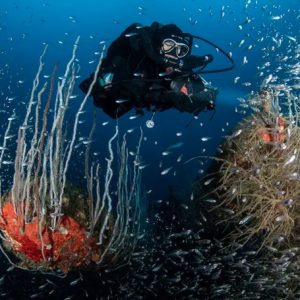
Bikini Atoll, Marshall Islands
Dive the amazing wreckage of the Ghost fleet at Bikini Atoll. Located in the remote…
$9,425 -
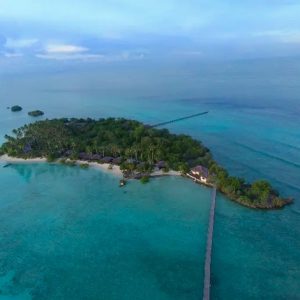
Borneo, Indonesia
A unique expedition to make 30 dives in one of the most biodiverse seas on…
$5,250 -
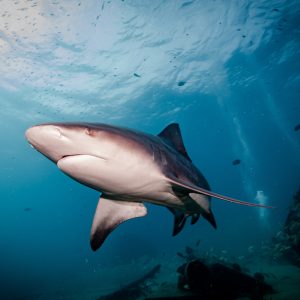
Cabo Pulmo, BCS
Off the coast of Cabo Pulmo is the largest coral reef in the Gulf of…
$1,050